
The Art of Unselfish Understanding
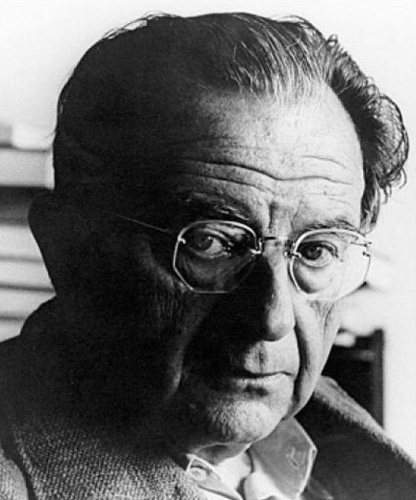
by Erich Fromm

In April 2017, I attended the World Work Seminar in Porto Heli, Greece, hosted by Arny and Amy Mindell. It was a profoundly moving experience that touched me to the bone. That year’s theme was Deep Democracy in a World of Divides: Shifting Consciousness in Politics, Economy, Ecology and Relationships.
What stayed with me most was the understanding that real democracy is, at its heart, a practice of deep and open-hearted listening—listening without an agenda or preconceived outcome. True presence. It is a quality I continue to endeavor to cultivate.
Philosopher and psychologist Erich Fromm’s Six Rules of Listening offer a thoughtful guide to developing this essential art.
The physicist David Bohm once wrote:
“If we are to live in harmony with ourselves and with nature, we need to be able to communicate freely in a creative movement in which no one permanently holds to or otherwise defends his own ideas.”
How we might learn to listen in this way was explored by the humanistic philosopher and psychologist Erich Fromm in a 1974 seminar in Switzerland. The transcript of those seminars was eventually adapted into the posthumously published The Art of Listening.
For Fromm, listening is “an art like the understanding of poetry.” And, like any art, it has its own principles and practices. Drawing on his half-century as a therapist, Fromm offers six guidelines for cultivating the art of listening—and the possibility of a deeper, more unselfish understanding of one another.
Listening, Fromm argues, is “is an art like the understanding of poetry” and, like any art, has its own rules and norms. Drawing on his half-century practice as a therapist, Fromm offers six such guidelines for mastering the art of unselfish understanding:
1. The basic rule for practicing this art is the complete concentration of the listener.
2. Nothing of importance must be on his mind, he must be optimally free from anxiety as well as from greed.
3. He must possess a freely-working imagination which is sufficiently concrete to be expressed in words.
4. He must be endowed with a capacity for empathy with another person and strong enough to feel the experience of the other as if it were his own.
5. The condition for such empathy is a crucial facet of the capacity for love. To understand another means to love him — not in the erotic sense but in the sense of reaching out to him and of overcoming the fear of losing oneself.
6. Understanding and loving are inseparable. If they are separate, it is a cerebral process and the door to essential understanding remains closed. In the remainder of The Art of Listening, Fromm goes on to detail the techniques, dynamics, and mindsets that make for an optimal listening relationship, in therapy and in life.
Reprinted in part from The Marginalian by Maria Popova.